
Why Your Substack Open Rate Drops as You Grow (and Why That’s OKAY)
If your subscriber count is rising and your open rate is falling, congratulations. You’re normal.


At some point on Substack (or whatever newsletter service you use, e.g., Mailchimp, etc.), you refresh your stats and get emotional whiplash:
🆙 Subscribers up,
👎 Open rates down,
🧠 Your brain immediately filing for bankruptcy.
Pause. You didn’t break your newsletter. Breathe.
This isn’t a talent issue. It’s simple math colliding with unpredictable human behavior. And we humans are beautifully inconsistent. Let’s unpack what’s happening.
💥 Gratitude to my exclusive advertising sponsor, the always-free Booklinker, and the paid tool, GeniusLink. I love both💥 (affiliate link).
What’s Happening? Math (Sorry)
When you first start a newsletter, your readers are basically your inner circle. They found you on purpose. They’re curious, invested, and even excited. They open almost everything.
Early open rates are high because early readers are enthusiastic and not yet buried under twelve (or 1200) newsletters, seven group chats, work, life, family, and the rest of our daily onslaught.
When your list is small and made up mostly of highly engaged early readers, open rates are often higher. As your audience grows and broadens, those rates naturally stabilize. That’s not platform manipulation. It’s basic email math.
Industry benchmarks consistently show engagement rates shift as list size increases, according to Mailchimp.
As your newsletter and subscriber base grow, you attract new kinds of readers. Some are casual. Some subscribed because they liked one post. Some genuinely plan to read later. Some are subscribed to so many newsletters that their inboxes need adult supervision.
Same list. Very different attention levels. That alone drops the percentage.

Then there’s exhaustion. Inbox fatigue is real (I mean, it’s got a name). Most subscribers aren’t rejecting our work. They’re skimming, saving, opening when they can, or reading in intervals as time allows.
Just like we do.
Also worth saying: open tracking isn’t perfect. Privacy protections and email client behavior make open rates noisy, especially as lists get bigger. So part of the “decline” is just technology doing a poor job of measuring real humans.
⬇️ This post below got me on the Rising in Education list three times. Categories, y’all (read the post).

So If Open Rate Isn’t The Main Thing, What Is?
This is where we can relax a bit.
Once your newsletter grows past the early stage, the number of views and readers matters more than the open rate percentage. By “early stage,” I mean the phase when most subscribers know you personally or subscribed very intentionally, usually in the first few hundred subscribers, before growth introduces more casual readers.
A 35 percent open rate on 3,000 subscribers beats a 65 percent open rate on 300 every single time. More humans are reading you, even if they’re not all opening every post instantly.
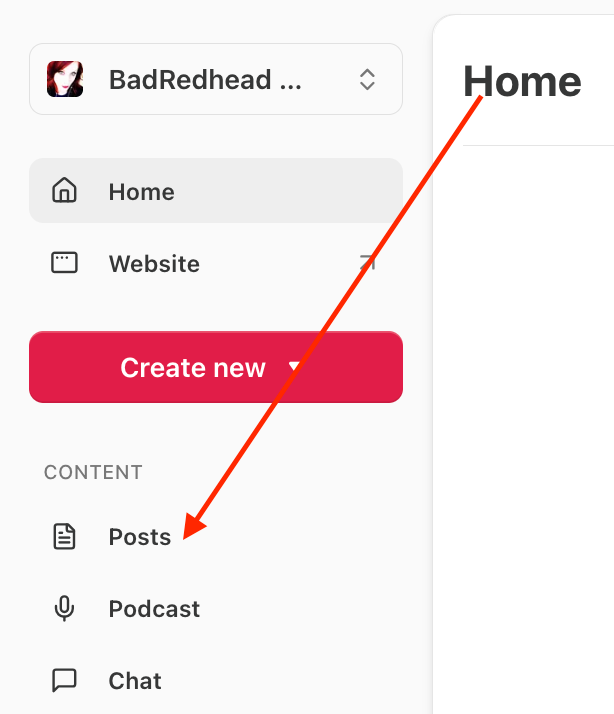
How to check: If you click on Posts on the left side of your publication dashboard, you will see analytics.
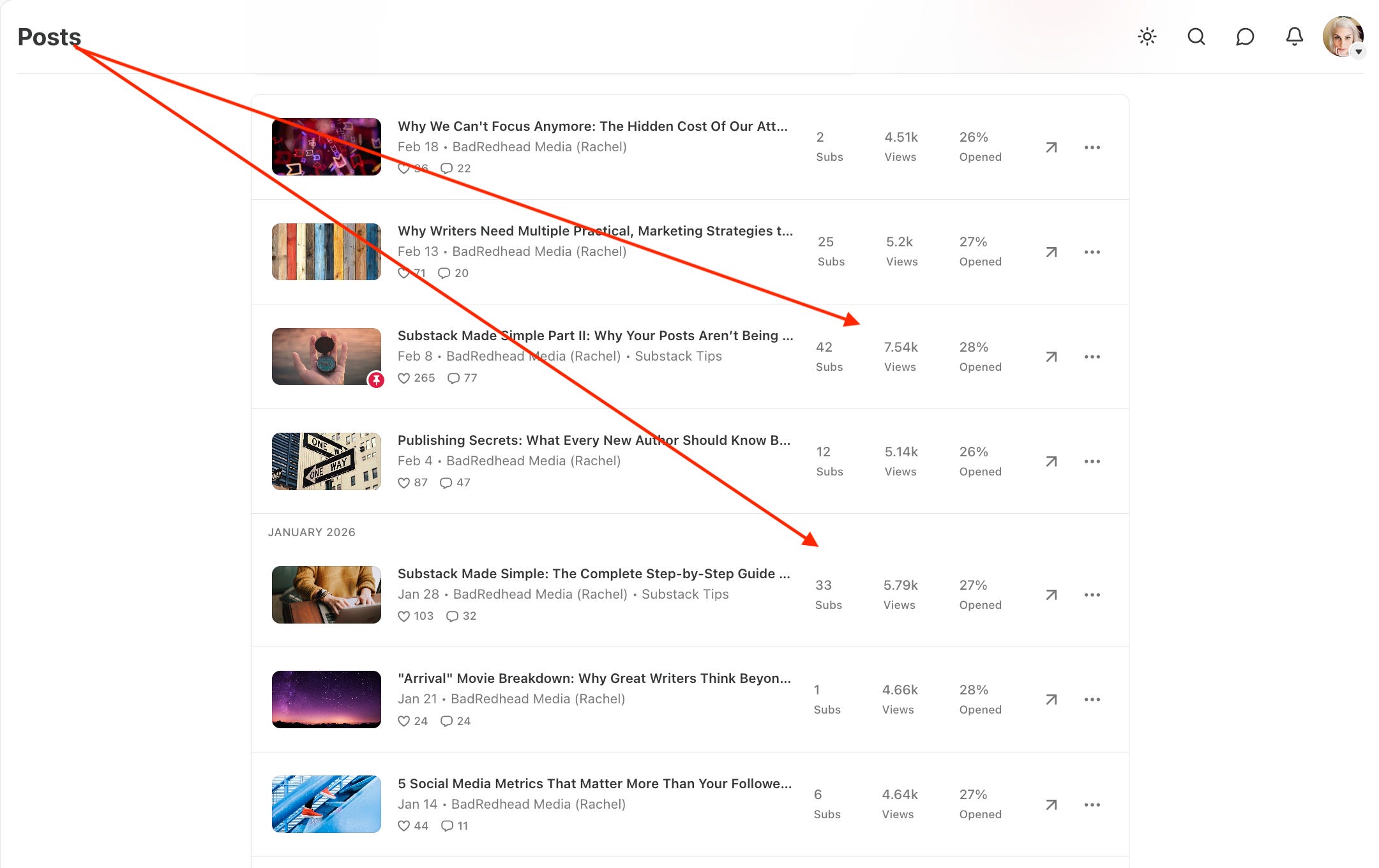
My stats: This isn’t scientific, as I don’t always publish on the same day at the same time, but I can say that, across about 10 Substack accounts I manage right now, I see the same trend on everyone’s dashboard. More here.
Below, you can see that my views generally increase (the top post is the latest, so it’s catching up), and open rate decreases. Not every time, but enough to ponder.
You can also see that my “How to Substack” posts are clearly getting the most views and subs, even if my open rate is around the same.
You’ll also start to notice a quiet core of readers. They don’t always comment. They don’t open everything. But they keep showing up. You recognize their names. They reply occasionally. They read posts that aren’t even “for” them.
Some of my readers don’t ever respond here, but send me lovely emails.
That group is your foundation, not your open rate.
Another strong sign is that older posts are still getting read. When people find something you wrote weeks or months ago, subscribe from it, and then read more, that means your work has legs.
You’re building an archive, not chasing perfect timing. Think long-term.
Engagement matters too, but it doesn’t need to be loud. A few replies, comments, shares, emojis, or likes tell you the writing landed. Think quiet nodding, not standing ovation.
Giving back is a wonderful way to connect with folks. Share their stuff. Say why you liked it. Add them to your Recommendations. Be a good citizen.
Example: this Note below. I love helping folks learn how to navigate this place. Likes, clicks, and comments are all a great byproduct, of course, but I wrote this to help, not chase, clicks.
And yes, people sticking around matters more than people opening everything.
Silent subscribers aren’t failed subscribers. They’re people with jobs, kids, stress, health issues, and limited energy. Just like us.
If people dip, don’t take it personally. Life happens. Welcome to Earth.
The Mindset Shift That Helps
Open rate measures behavior in a crowded inbox. What you’re building measures trust over time. These are not the same thing.
If you optimize for open rate, you’ll start chasing hooks, rewriting headlines, and wondering if every post is “enough.” If you optimize for readers, you build something people return to when they actually need it.
That matters even more if you write across multiple topics. Not every post is for every reader. That’s not a flaw. That’s reality.
Things You Can Do Right Now (No New Writing Required Unless You Wanna)
If your stats are making you twitchy, here’s the good news: You don’t need to publish more. You just need to let your existing work circulate.
Reshare an older post on Notes with one human sentence. “Still relevant.” “For anyone new here.” “Posting this again because people keep asking me about it.” “ICYMI” (in case you missed it). Most of your current readers never saw it the first time.
Pin one post to your publication profile that answers the question, Why should I be here? Not the newest post. The clearest one. The one you’d send to someone who just found you.
Link older posts inside newer ones when topics overlap. A simple “This builds on something I wrote last year” keeps readers with you rather than sending them back into algorithmic chaos.
Reply to comments or emails, even briefly. A sentence is enough. It strengthens trust and boosts engagement without you having to chase numbers.
Views: And please, for your own peace of mind, start ALSO looking at total views, not only open rate percentages.
A Simple Substack Health Checklist (Save This)
Bookmark this. Come back when the stats start whispering unhelpful missives.
☐ Reshare 1–2 older posts on Notes
☐ Check total views, not open rate percentages
☐ Pin (or re-pin) your clearest “start here” post
☐ Link one older post inside a newer one
☐ Reply to a comment or email, even briefly
☐ Confirm people are still subscribing
☐ Close the stats tab before imposter syndrome rears up.
Optional but important:
☐ Remind yourself that silent subscribers are still readers
If you do half of this, you’re doing fine, but start with one task. That’s it.
My Low-Stress Weekly Substack Routine
Once a week, I spend about 20–30 minutes doing three things.
First, I look at the total views on my last few posts. Just the number. No percentages. No judgment. If you check constantly, step away from the computer and take a deep breath. Eat a cookie. Pet your cat.
Second, I reshare an older post on Notes with a single sentence. No overthinking. Notes are discovery inside the app, not repetition.
Third, I check that at least one pinned or visible post clearly explains what I write about and who it’s for.
Then I stop.
No deep stat dives. No “fixing” silent readers. No chasing a perfect number that changes based on inbox algorithms I don’t control.
That’s it.
The Part That Actually Matters
If your subscriber count is rising and your open rate is drifting down, nothing is wrong.
You didn’t lose your voice.
You didn’t bore your readers.
You didn’t miss some secret Substack rule.
You just outgrew the tiny room where everyone made eye contact while pretending not to. Now you’re writing in a bigger room. Some people sit in the back. Some come late. Some listen quietly. And many come back when they’re ready.
That’s not failure. That’s a real audience. And that’s the point.
Sources (For The Data-Curious)
Quick note for the folks who like receipts: Substack doesn’t publish public charts linking list size to open rates.
But current email marketing benchmarks show that open rates vary widely by audience, inbox behavior, and privacy tracking limits, which is why percentages tend to get noisier as newsletters grow.
Recent benchmarks and context:
• MailerLite email performance benchmarks (2026)
• HubSpot email open rate benchmarks and analysis
Something New To Me: Sections!
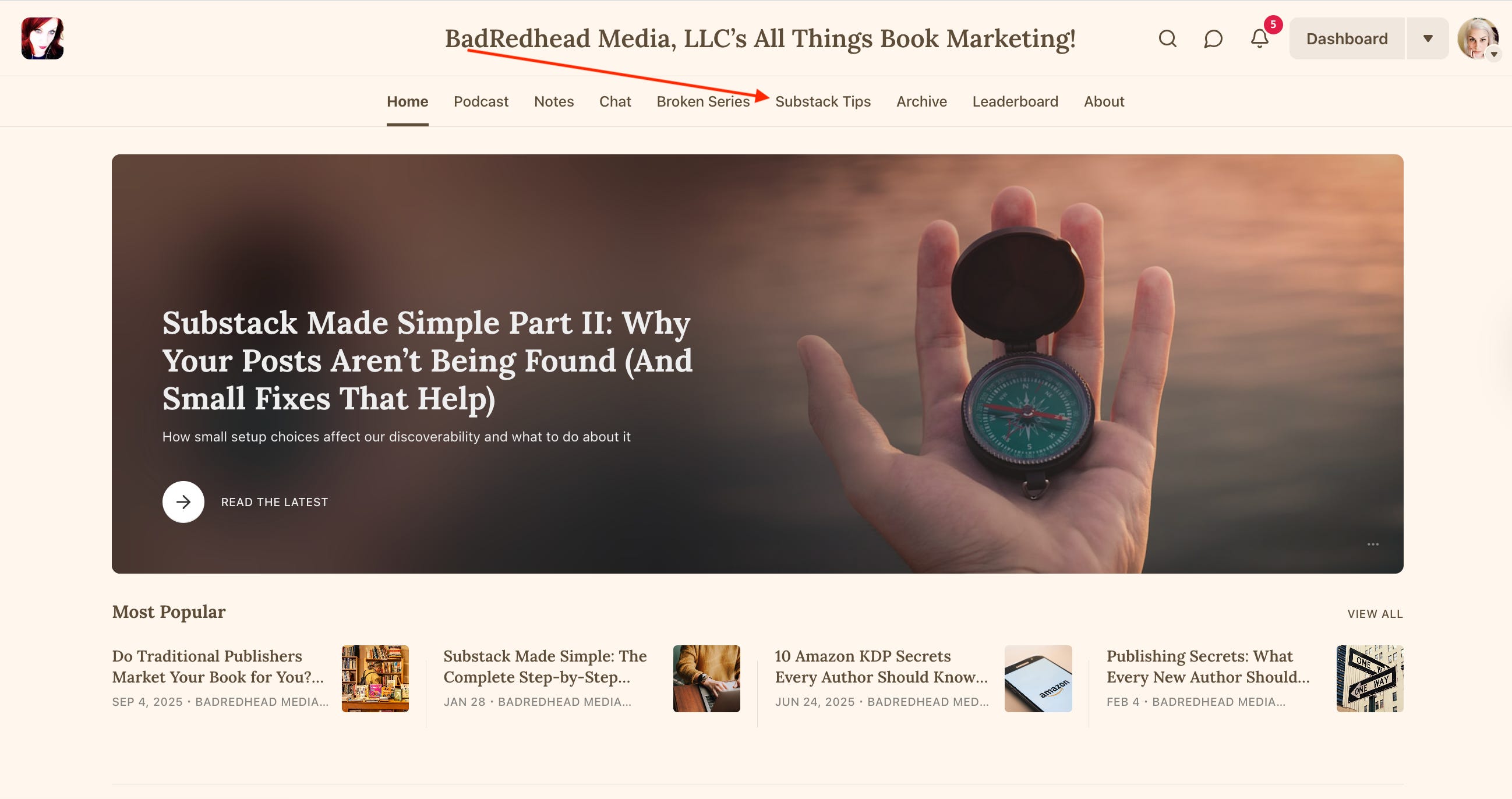
I just created a specific section inside my publication for my Substack Tips, so they’re all in one place within my publication (as well as on the homepage). This means people can sub to only that Section and/or to my entire newsletter.
Super meta.
💫 As always, completely free to read and subscribe. Takes a while to write these weekly articles, so if you’d like to support, please subscribe, paid or free. I’m honored you’re here.
Need help? I’m for hire: badredheadmedia@gmail.com. Consulting, Substack help and setup, book marketing, social media, branding…that’s my jam.
Whatever works for you. I’m glad you’re here. 🌻
This is *exactly* what I needed at the exact right moment, Rachel. How did you know?! Thanks so much for this! Saving. And sharing. All the things.
Your articles are always so helpful and encouraging. Thanks Rachel!