
Should You Put Your Substack Behind a Paywall? Maybe You’re Asking the Wrong Question.
Choosing between free and paid content is about building the publication that supports your goals...

I recently read an article on Substack arguing that paywalls are “undemocratic.” As I read, it struck me that we weren’t really talking about paywalls at all: we were talking about business models.
Wait, We’re Writers. We Need a Business Model?
Don’t we have enough to do, Rachel? Always with the to-do list.
Relax. All a business model means is how you make money (or hope to) from your writing and the activities surrounding it.

Should writers charge for our work? Should everything be free? Is asking readers to become a paid subscriber somehow unfair? What about adding paywalls is undemocratic? Is a paywall the only option?
💥 Shout-out to my exclusive advertising sponsor, the always-free Booklinker (universal book links—so helpful!), and the paid tool, GeniusLink. I love both💥 (affiliate link).
None of those questions has a universal right or wrong answer. Instead, maybe we’re asking the wrong questions. Perhaps a different question:
What are you trying to build?
Once you know the answer, deciding whether to use a paywall or offer paid tiers becomes much easier, because what you’re building is unique to you. Maybe you don’t even want to build anything; you’re just happy to be here. That counts, too.
First, let’s clear something up: enabling paid subscriptions and putting content behind a paywall are two different things. You can offer paid subscriptions while keeping every post free for everyone to read.*
*Substack does require readers to provide their email address and create a free account - kinda like anywhere.
My Business Model Isn’t Your Business Model
I’ve always leaned toward keeping my content free and unpaywalled (different things) since I started as an author and book marketing consultant fifteen years ago —not because I think writers owe the internet free labor, but because it’s been the best strategy for my business.
In fact, a publishing industry mentor told me flat-out: stop giving away your knowledge free. (Didn’t listen.)
Free refers to what readers pay. Unpaywalled refers to whether the full post is restricted. A post can be free but available only to free subscribers, or free and publicly available to everyone. It’s confusing. 🫤
As a solopreneur, my Substack supports my book marketing consulting business, books, speaking opportunities, and the relationships I’ve built over the years. My newsletter isn’t my primary product. Neither are my books, or my biz itself, but all pieces of a much larger picture, just as building your author platform consists of more than one tactic.
Today, my publication has grown to over 14,000 subscribers, with about 45 paying subscribers. Some people look at those numbers and assume I should be converting more readers into paying subscribers.
I don’t. Paid subs are great and much appreciated, but again, not what my entire business model depends on.
Visibility has always been more valuable than maximizing subscription revenue. Keeping most of my work free has introduced me to thousands of writers I’d never have met otherwise. Those readers share my articles, recommend the publication, buy my books, hire me, invite me to speak, and tell others about what I do.
One of the biggest surprises has been what this publication has brought into my life beyond subscriber numbers. Conversations have turned into friendships, comments have led to collaborations, and Notes and Chat have introduced me to fascinating authors, readers, publishers, and fellow creators.
I never could have predicted any of that, and I don’t take a single bit of it for granted.
What If Writing Is Your Business?
This is where I think so many discussions about paywalls go sideways. We often assume that every writer/creator has the same goals. We don’t.
If you’re a journalist spending weeks reporting a single story, you deserve to be paid for that work. If you’re publishing serialized fiction, premium essays, or original research, subscription income may be what allows you to keep creating. If your newsletter is your primary source of income, a paid publication may simply be the most sustainable business model.
None of this makes you greedy; rather, it makes you a professional writer running a professional business. Neither approach is more ethical than the other. They’re simply different ways of making a writing career work.
Before You Flip the Paid Switch
Before you enable paid subscriptions, spend a little time thinking about what success actually looks like for you.
Is your newsletter the product, or does it support something else? How?
Are you hoping to earn recurring subscription income, grow your audience, sell books, attract consulting clients, or build your reputation? How?
Can you consistently create content readers can’t easily find elsewhere? Research.
Your answers will probably look different from mine, and that’s exactly the point.
For some writers, their newsletter is the product. They rely on paid subscriptions to cover the time required for reporting, research, or creating original work.
For others, the newsletter is a way to introduce readers to books, consulting, speaking, coaching, courses, or freelance services. That’s my approach. My publication helps people discover what I do, and many of those readers eventually become clients, buy one of my books, or become paid subscribers.
Still others use a hybrid model, keeping most articles free while offering bonus content or community perks to paid subscribers.
None of these approaches is inherently better than another. The right business model is the one that supports the kind of writing life and income you’re trying to build.
One of My Favorite Things About Substack
Substack doesn’t force writers into an all-or-nothing decision. Yes, you can put every article behind a paywall if that’s your goal. You can also publish occasional subscriber-only posts or place a paywall partway through an article.
But there’s another option that doesn’t get talked about nearly enough.
💥 You can keep your entire publication free while still offering paid subscriptions as a way for readers to support your work. NO paywall.
That’s essentially the model I’ve chosen.
My paid subscribers aren’t paying to unlock my articles; they’re supporting the time, research, experience, and consistency required to create them. If someone wants to say, “I appreciate what you’re doing, and I’d like to help keep it going,” they have a way to do that.
I never expect anyone to subscribe; I’m simply grateful when they do, however they do. The beauty of Substack is that you can experiment until you find the balance that feels right for you.
If you want to add a Donate or Tip button, it’s super easy: Click on Button on the toolbar on the top right as you compose (on desktop). Scroll down to Custom. Enter the text (e.g., Donation, Tip, Support, etc.) and the URL.
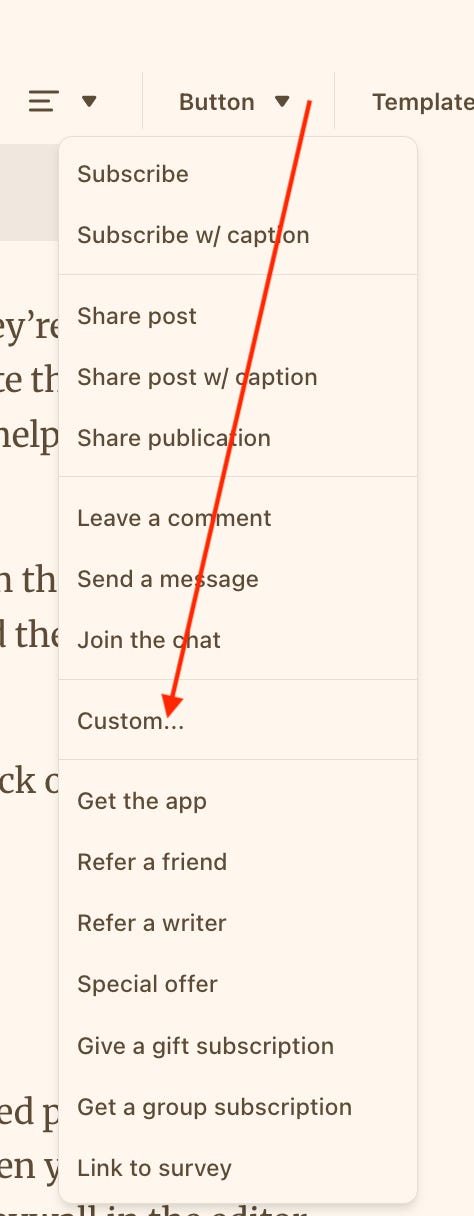
Be sure you’ve set up a Buy Me A Coffee or KoFi account first (free to do). Then add that URL. Click on the Donation or Tip button below, and you’ll see that it goes directly to my Buy Me A Coffee.
If You Decide to Use a Paywall
The mechanics are surprisingly simple.
First, create your publication. Once you’ve enabled paid subscriptions, write your article as you normally would. When you’ve reached the point where you want the free preview to end, insert a paywall in the editor and continue writing below it.
Or don’t paywall at all, so your content is always free and nonpaywalled. Before publishing, preview the post to see exactly what free readers and paid subscribers will experience. How-to is here.
How to Turn On/Off Paid Subscriptions
1. After signing into your Substack account, head to your Substack Publication Settings page.
2. Select Payments in the left navigation bar, and once in your Payments section, click on the button that says “Connect with Stripe.”
3. You’ll be taken to Stripe’s website, where you’ll fill out required details to start receiving payments. Learn more here about what information Stripe requires.
Country rules vary, and this option may not be available in your country.
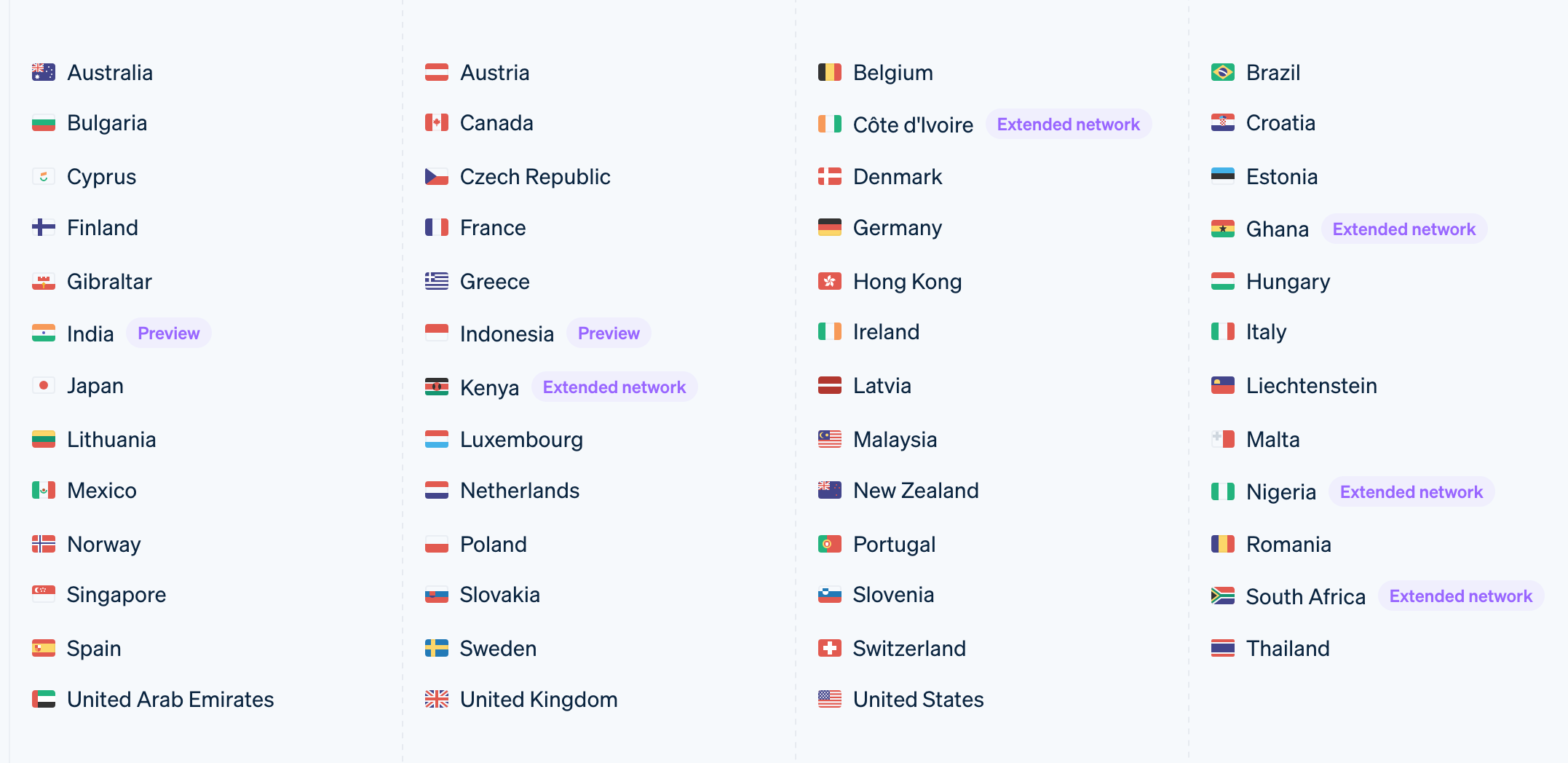
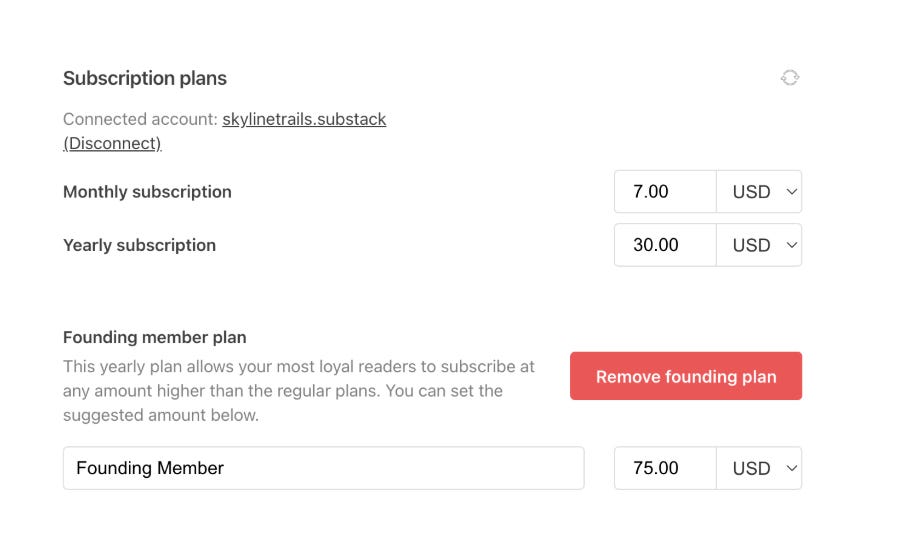
4. Return to the Settings page, set a price for your monthly, yearly, and founding member plans. Example:
A Thank You
Although I keep almost everything free, I never want my paid subscribers to feel like an afterthought. Paid subscriptions help support the hours spent researching, writing, editing, answering questions, responding to comments, and showing up here week after week - and treats for Pip, of course. 🐈
A monthly Substack subscription often costs about the same as, or even less than, one single book. Most of us don’t hesitate to buy a book we’ll finish in a weekend, yet a subscription can provide fresh ideas, conversations, and encouragement for far longer.
No guilt. Money is an issue. I pay for several subscriptions here that I find help me with my own Substack and learning with my limited budget. Worth it to me to support those creators. If you can’t pay, there are still 10 entirely free ways to support any creator here that cost you nothing but a bit of your time, shared here in a Note (click on it):
Whether you become a paid subscriber, buy one of my books, recommend this publication, hire me, leave a thoughtful comment, or simply keep reading, I’m sincerely grateful. Every one of those choices matters.
Another Reason to Consider Enabling Paid Subscriptions
This is probably the most important section, so pay attention, friends.
Even if you plan to keep every article free as I do, you can still turn on paid subscriptions. Offering a paid tier does not mean you have to put your content behind a paywall. This is what confuses most creators. Readers can continue receiving everything free, while those who want to support your work can choose to pay.
Substack has been rolling out new features specifically for publications with paid subscribers. If your goal is long-term growth, it’s worth knowing what’s available:
Once you reach 100 paid subscribers, you earn the first Substack Bestseller badge checkmark thingy by your name. Beyond being a nice milestone, it serves as a credibility signal that others find your work valuable enough to support financially. They have a color-code system:
Purple: tens of thousands of paid subscribers
Orange: thousands of paid subscribers
White: hundreds of paid subscribers
Reaching that milestone also makes you eligible for Substack’s Creator Kit, a guided media kit you can build inside Substack for brands participating in Substack’s sponsorship program; like a dating app, if you will, but with less ick and no ghosting, I hope.
Does every writer need those features? No, but they’re another reminder that enabling paid subscriptions isn’t only about charging readers —it can also unlock opportunities unavailable to free-only publications.
If none of this matters, stay free. And if you turn on paid and hate it, turn it off. Free will, y’all.
Your Publication. Your Rules.
If you’ve read this far hoping I’d tell you whether your publication should be free or paid, I’m going to disappoint you. I can’t answer that for you, but what I can tell you is this:
No one is entitled to our work simply because it’s published online. No writer should feel pressured to charge if a free publication better supports their goals. Your publication should reflect your business model, your readers, and the kind of writing life you want to build. Not sure of your business model? Do your homework.
The beauty of Substack isn’t that everyone can build the same kind of publication. It’s that we don’t have to.
Resources
If you’d like to learn more, here are a few places to start:
Paid subscriptions and paywalls and Substack’s Going Paid Guide
Substack Help Center: Creator Resources
My article, Why Everything You Think You Know About Substack Is Probably Wrong
My article, Medium, Substack, or Beehiiv: Which Platform Is Right for Writers?
I’d Love to Hear Your Perspective
Do you keep your publication completely free, mostly free, mostly paid, or somewhere in between? More importantly, why did you make that choice?
Has your thinking changed over time? I’d love to hear your experience in the comments. If you found this article helpful, I’d appreciate it if you’d recommend this publication to another writer who might benefit from it.
🌻 Whether you read for free, become a paid subscriber, or leave a little something in the tip jar, I’m truly glad you’re here.
The truth is simple. Most authors don’t fail because their writing isn’t good. They struggle because readers never get the chance to find them. Let’s fix that.
The thesis is correct, paywalls are undemocratic, in the sense that one person, not the majority, is making the decision. Because labor isn't democratic. No group of people get to decide how we monitize our content, how we spend our time, how we live our lives.
But, 'undemocratic' is often used as 'unfair', which paywals absolutely are not. There is no grey area here. Unfair is taking someone's work, because you feel entitled to it.
"None of those questions has a universal right or wrong answer."
This might work for some things, but being entitled to someone else's labor, time, and creative output has a word. It is 'ownership', it is slavery. If anyone tries to claim they have ownership over your work, they are not worth engaging with.
On a lighter note, I do the "content free, but paid subs on" model, with a twist. Any 'followup' I manually paywall after two weeks. Free subs still get everything, but to go through the longer form stories later, you need to pay for the archive access. It also keeps 'part 1' stories as free previews.
I have not set up a paying function (to be paid or paying someone) because I am still exploring this platform. I do support on Patreon. But more people are moving from that place ( at least it seems to me) to Substack.